Framework · AI Governance
The Trust Equation for Human-Centered AI
A practical framework for embedding clarity, consent, and accountability into the products and policies you ship.
By Miri Rodriguez
CEO & Founder, Empressa AI
8 min read
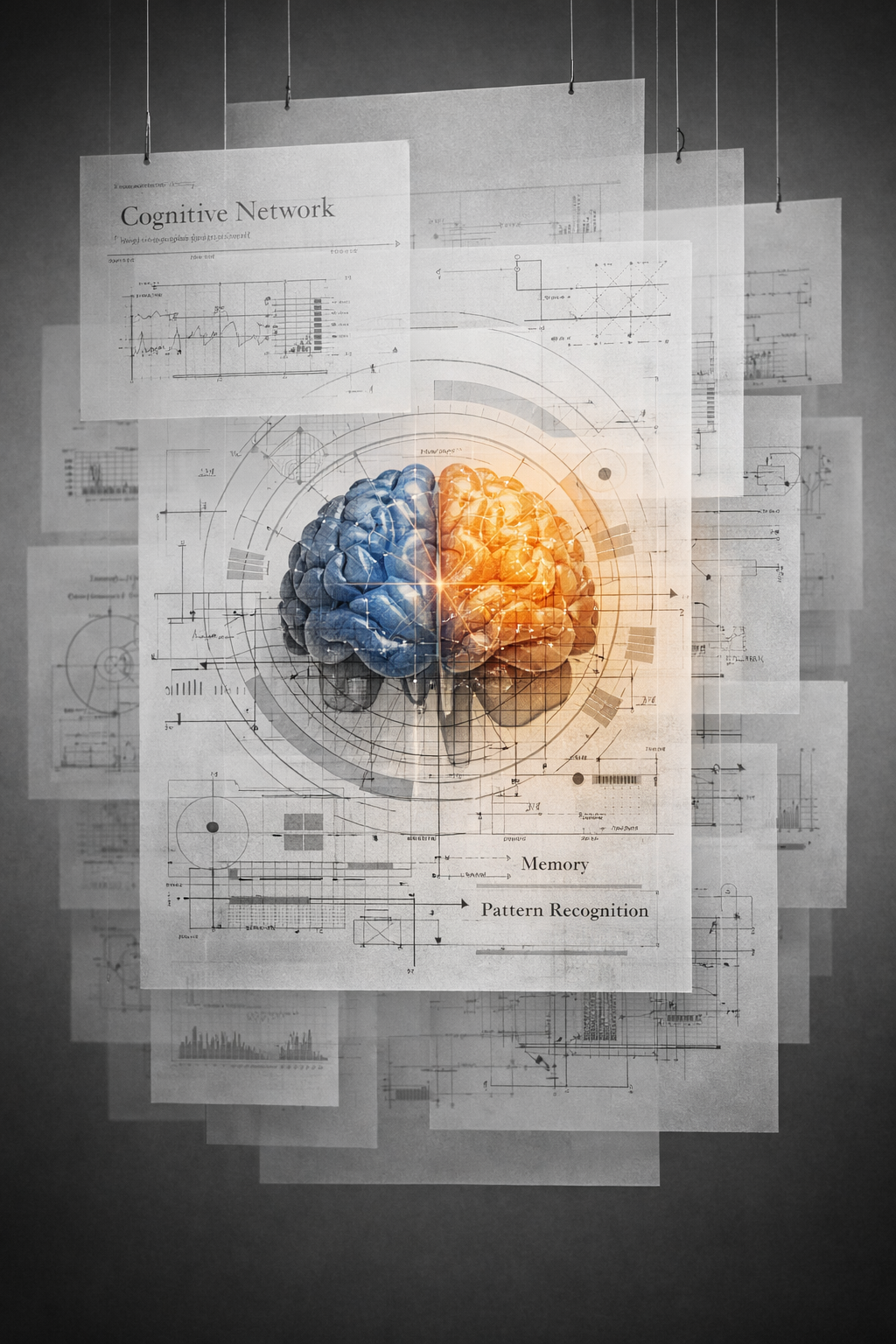
The emerging blueprint of trust in the age of intelligent systems.
There is a persistent and expensive misconception in enterprise AI strategy: that trust is a communications problem. That if you just explain the technology well enough — if you send the right all-hands deck, craft the right FAQ, hire the right change management firm — people will come around. They won't. Not reliably. Not at scale.
Trust is not a feeling you generate through messaging. It is a structural property of your system. It is either designed into the architecture of your AI products and policies, or it is absent — and no amount of downstream reassurance will manufacture it retroactively.
71% of employees say they trust their employers to deploy AI ethically — which sounds encouraging until you read the companion stat: nearly half of those same employees worry about AI inaccuracy and cybersecurity risks. That is not contradiction. That is the real landscape: goodwill is present, but it is fragile and conditional. It depends entirely on whether the systems you build earn it.
Human-centered design is projected to be a strategic priority for 75% of organizations by 2025. The gap between "priority" and "practice" is where trust either gets built — or quietly eroded.
The Trust Equation
Trust in AI systems is not a single variable. It is a relationship between three structural components that must all be present and mutually reinforcing:
"Clarity + Consent + Accountability = Sustained Adoption"
Remove any one element and the equation collapses. You don't get partial trust. You get compliance theater, passive resistance, or the slow bleed of disengagement.
Component 1: Clarity
Clarity
Clarity is the condition under which people understand what an AI system does, how it makes decisions, what data it uses, and where it is and isn't reliable.
In an AI context, clarity doesn't mean publishing model weights. It means that the humans who interact with, are affected by, or must act on AI outputs can form an accurate mental model of what they're dealing with.
What It Looks Like in Practice
- ·In products: Every AI-generated recommendation surfaces a plain-language explanation of the factors that produced it. "This candidate was ranked highly because of demonstrated project ownership and cross-functional experience" is clarity. A match percentage is not.
- ·In policies: AI use policies distinguish between AI as a decision-support tool versus AI as a decision-maker, and they specify which is happening in which contexts. Ambiguity here defaults to distrust.
- ·In communications: When AI is involved in a customer-facing interaction, it's disclosed. When an AI-generated output has known limitations, those limitations are stated at the point of use — not buried in terms of service.
What Breaks Trust When Clarity Is Missing
When people don't understand how an AI reached a conclusion, they cannot evaluate it, challenge it, or take ownership of the outcome. This produces one of two failure modes: over-reliance (accepting outputs uncritically) or blanket rejection (dismissing AI input entirely because the reasoning is opaque). Neither produces good decisions.
Diagnostic Question for Leaders
Can the people most affected by this AI system accurately explain what it does and doesn't do in plain language? If not, you don't have a training problem. You have a design problem.
Component 2: Consent
Consent
Consent is the condition under which people have meaningful agency over how AI systems engage with them, their data, and their work.
In an AI context, consent is not a checkbox on an onboarding form. It is ongoing, informed, and granular.
What It Looks Like in Practice
- ·In products: Users are given real choices — not dark patterns that make opting out technically possible but practically burdensome. AI personalization features are opt-in by default for high-stakes use cases (performance management, health, financial decisions).
- ·In policies: Employees whose work is being analyzed or optimized by AI systems are told so — in advance, in plain language, and with documented recourse. Retroactive disclosure is not consent.
- ·In communications: When AI capabilities expand, organizations communicate that change proactively — not in a changelog footnote.
What Breaks Trust When Consent Is Missing
Consent violations are among the fastest trust-destroyers in enterprise AI. Women are 38% more likely than men to have ethical reservations about AI, and 29% more likely to question AI accuracy — a Truth that the populations most often carrying skepticism are the ones whose consent frameworks have been designed around others' risk tolerance. That asymmetry has consequences for both culture and adoption.
Diagnostic Question for Leaders
Do the people whose data, work, or decisions are touched by this AI system have meaningful agency over how it engages with them — or do they just have the illusion of it?
Component 3: Accountability
Accountability
Accountability is the condition under which there is a named, reachable human responsible for the outcomes an AI system produces — and where processes exist to flag, investigate, and correct those outcomes when they cause harm or error.
In an AI context, accountability is the hardest component to design because it runs counter to the organizational instinct to treat AI decisions as neutral, automated, and therefore ownership-free. They are not.
What It Looks Like in Practice
- ·In products: Every AI system has a designated owner accountable for its performance, fairness, and impact — not a team, not a platform, not a vendor: a person.
- ·In policies: There are documented escalation paths for employees and customers who believe an AI decision was incorrect or harmful. These paths are tested, staffed, and used.
- ·In communications: When AI systems make errors at scale, leadership acknowledges it directly and publicly. AI products built by gender-diverse teams show 15% fewer bias-related errors — which means accountability also starts in who builds the system, not just who monitors it.
What Breaks Trust When Accountability Is Missing
Without accountability, trust becomes unreciprocated. You are asking humans to engage with a system that can affect their work, their reputation, and their livelihood — while the system's owners carry no equivalent exposure. That asymmetry is not sustainable.
Diagnostic Question for Leaders
If this AI system produced a harmful outcome today, could you name the person responsible for investigating and correcting it within 24 hours?
Trust Is Not a Feature. It's Infrastructure.
Features ship. Infrastructure is foundational. The distinction matters because organizations routinely treat trust as the former — something added at the end of the product cycle, after the hard engineering decisions have already been made. A privacy notice. A bias disclosure. An explainability layer bolted onto a model that was never designed to explain itself.
This approach is not just inadequate. It is structurally incapable of producing the result you need. When trust is retrofitted, it is always visible as a retrofit. Users feel it — the seam between the system that was built to perform and the reassurance that was layered on top to comply.
"Trust is not a feature. It's infrastructure."
Infrastructure, by contrast, is invisible when it works. Trust designed at the architecture level means the AI system's behavior — its defaults, its disclosures, its escalation paths, its human review checkpoints — reflects the values the organization claims to hold, without requiring anyone to consciously choose trust in each interaction.
This requires that product, legal, security, and people teams are in the same room at the beginning of the design process — not after the model is deployed. It requires that "what does this system owe to the humans it touches?" is asked before "how do we ship this?" And it requires leaders who are willing to slow the build when the trust architecture is not ready, even when the model is.
The Trust Audit
Use these questions to assess whether your current AI products and policies are structurally trustworthy — or simply trust-adjacent.
Clarity
- 1.Can the people most affected by this AI system accurately explain what it does and doesn't do in plain language?
- 2.Are the limitations, error rates, and known failure modes of this system disclosed at the point of use — not buried in terms of service?
Consent
- 3.Do users and employees have meaningful, accessible agency over how this system engages with their data and decisions — including the ability to opt out without penalty?
- 4.When the scope or capability of this system has changed since initial deployment, were those changes communicated proactively and in plain language?
Accountability
- 5.Is there a named individual — not a team, not a vendor, not a process — accountable for this system's impact and empowered to act when something goes wrong?
- 6.Is there a tested, staffed escalation path for people who believe this system has produced an incorrect or harmful outcome?
Architecture
- 7.Were trust requirements — consent mechanisms, explainability, escalation paths, bias review — built into this system's design from the start, or added after the core architecture was set?
- 8.Can you point to a specific moment in this system's development when the question "what does this system owe to the humans it affects?" was formally asked and answered?
If you answered "no" or "I'm not sure" to more than two of these, you do not have a trust gap. You have a trust architecture gap — and the difference is not cosmetic.
"The most human thing you can build into an intelligent system is the acknowledgment that the humans it touches deserve to understand it, shape it, and hold it accountable — and then designing that acknowledgment into every layer of how it works."
The organizations that will lead in the next decade of AI deployment will not be the ones with the largest models or the fastest inference. They will be the ones whose systems were designed, from the first architecture review, with the trust equation intact: clarity that earns understanding, consent that respects agency, and accountability that closes the loop when things go wrong.
That is not a communications strategy. It is not a compliance checklist. It is infrastructure — and infrastructure is what separates the organizations that ship AI from the ones that earn the right to have it used.
Miri Rodriguez is the CEO and Cofounder of Empressa AI, where she works at the intersection of AI strategy, human-centered design, and women's economic empowerment.
Subscribe to Insights
Essays on AI readiness and the human side of transformation.